
di Keith CHRISTIANSEN
Abbiamo ricevuto queste importanti osservazioni via mail dal Prof. K. Christiansen, dalla Prof. sa Rossella Vodret, nonchè dai Proff. Stefano Causa, Stefania Macioce e Alessandro Zuccari (che pubblichiamo con altro articolo) in relazione alla recentissima scoperta della Prof.sa Cristina Terzaghi apparsa su la Repubblica di domenica 8 Novembre riguardante la versione – ritenuta quella originale- di un quadro di Caravaggio raffigurante il “Giovane con caraffa di rose“. Com’è noto del dipinto esistono altre versioni ma “a questo punto – scrive Cristina Terzaghi su la Repubblica sulla base delle sue ricerche archivistiche – “da consegnarsi allo statuto di copie“. La ristrettezza dei tempi e le stringenti regole redazionali non ci hanno consentito di acquisire ulteriro pareri – mentre altri studiosi hanno preferito rimandare le loro osservazioni alla visione diretta del dipinto- e tuttavia come sempre About Art è aperta a chiunque – purchè addeto ai lavori- intenda intervenire in proposito. Avvertiamo i lettori che la fotografia pubblicata è quella apparsa sui social e sugli organi di stampa la cui qualità è piuttosto bassa.
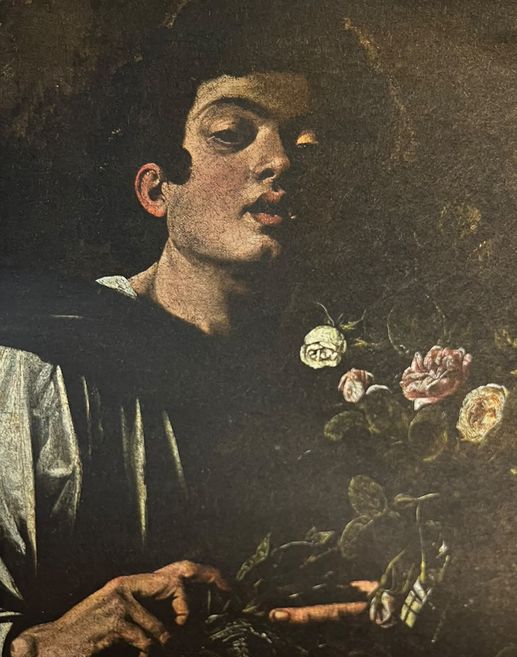
A friend sent to me the article, which I have read with pleasure. The discovery of the picture has been much talked about over the past couple of years and we have been waiting for Cristina Terzaghi to publish it. She has now done so and I am confident that there will be a firestorm of opinions expressed. Judging both from the published photos; those I have previously seen; and reports from a few people who have seen the picture, I think this is in all likelihood the lost original known previously through the copy in the High Museum in Atlanta (as well as two others).
That picture was examined at The Metropolitan Museum prior to its inclusion in the 1985 Age of Caravaggio, and I think the concluding sentence of Mina Gregori’s exemplary entry pretty much sums up the curious traits of the present picture when compared to other early paintings such as the Boy Peeling a Fruit (original in the Royal Collection); the Boy with a Basket of Fruit (Borghese Collection, from which this painting also comes); and the Boy Bitten by a Lizard (National Gallery): to wit, that “the young artist was obliged to accomodate his manner to the practices of Arpino’s workshop.”
In other words, this is a picture painted in Arpino’s workshop imposing that artist’s idealizing figure types over a posed model (whence the unsuccessful foreshortening) and Arpino’s abstracting drapery forms rather than working from life and setting these features, which emphasize the picture’s allegorizing intent, in contrast to the realism of the still life that Arpino—ever attentive to marketing potentiality—prized in the young Lombard.
Question: is the finger of the left hand the index finger “pointing back” at the boy, or is it, instead, the “digitus impudicus” that transforms the picture into a vulgar solicitation with a demonstrably homoerotic slant? I rather think the latter and that the picture fits into a whole genre explored in the groundbreaking Les Bas-Fonds Baroque of some years back. Indeed, I wonder if it was not that finger (painted out in the copy in Atlanta) that caused the picture to be sold in the nineteenth century—but also (like the famed sculpture of the Hermaphrodite) appealed to Scipione Borghese!!
Keith CHRISTIANSEN NY 8 November 2026
Italian translation